PART 2
Mia looked up at Adrian, all traces of mischief gone from her small face.
“Because Mommy thinks nobody stays.”
The words were quiet.
Too quiet.
They landed in the executive hallway with none of the comic force of her earlier declaration and somehow managed to be infinitely more devastating.
I forgot about the executives lingering near the elevators.
I forgot about the board meeting.
For one terrible moment, I even forgot Adrian was my boss.
“Mia,” I said softly.
She glanced at me, immediately uncertain.
“I didn’t say a bad thing.”
“No, sweetheart.”
I crossed the few steps between us and crouched beside her.
“You didn’t.”
Her shoulders relaxed.
Children had an extraordinary ability to tell the truth without understanding how carefully adults spent their lives arranging furniture around it.
Adrian remained silent.
I could feel his attention on me.
Not the evaluating stare he used in meetings. Not the cool scrutiny that made vice presidents revise entire presentations after he lifted one eyebrow.
This was different.
Human.
And somehow that was worse.
Mia hugged Gerald, her stuffed elephant, against her chest.
“You said it to Aunt Sophie.”
I closed my eyes.
Of course I had.
Three months ago, after Mia had gone to bed—or so I had believed—my best friend Sophie had been sitting at my kitchen counter with a glass of wine while I explained why I had canceled yet another date.
I had said, People leave. Eventually you learn not to build your life around the possibility that someone might stay.
Apparently six-year-olds were excellent archivists.
“I was talking about grown-up things,” I told her.
“You sounded sad.”
My throat tightened.
Before I could answer, Adrian spoke.
“Sometimes grown-ups say things when they’re tired that sound more permanent than they really are.”
I looked at him.
His gaze was on Mia.
There was no condescension in his voice.
No attempt to dismiss what she had heard.
Mia considered this carefully.
“Like when Mommy says she’s never making pancakes again because I get flour everywhere?”
The corner of Adrian’s mouth moved.
“Exactly like that.”
“I always get pancakes again.”
“I suspected you might.”
Mia smiled.
And just like that, the dangerous little cloud passed.
At least for her.
Not for me.
I stood and put a hand on her shoulder.
“Come on. We’re going back to my office.”
“But Mr. Handsome—”
“Mia.”
Adrian coughed, suspiciously like he was hiding another laugh.
“Mr. Kane,” she corrected.
“Thank you.”
“He said he has no crayons in his office.”
“That sounds like a problem he’ll have to solve himself.”
“I have people for that,” Adrian said solemnly.
I stared at him.
He stared back.
For approximately two seconds, something unfamiliar passed through his expression.
Amusement.
Then his professional composure returned.
“Ms. Bennett.”
There it was.
The temperature dropped six degrees.
“Yes, Mr. Kane?”
“My office.”
My stomach dropped.
“Of course.”
Mia looked between us.
“Am I fired too?”
Adrian blinked.
I nearly choked.
“No one is fired,” he said.
“Yet?” Mia asked.
Adrian pressed his lips together.
I was beginning to understand that my daughter possessed a unique talent for dismantling powerful men.
“No,” he said. “Not yet.”
“Okay.”
She took my hand.
“I’ll wait.”
Ten minutes later, Mia was once again installed in my office, this time under the watchful supervision of my assistant, Lena, who had sworn upon her collection of vintage handbags that she would not let my child cross the threshold.
I stood outside Adrian Kane’s office trying to remember whether severance packages included dignity.
His assistant, Julian, gave me a sympathetic look.
“Go in.”
“That sounded ominous.”
“It wasn’t intended to.”
“Somehow that makes it worse.”
Julian smiled faintly.
“Claire.”
I paused.
In two years, Julian had never used my first name.
“He isn’t angry.”
“That’s exactly what people say before someone gets murdered in prestige television.”
“You’ve been spending too much time with Lena.”
“That is entirely possible.”
I knocked.
“Come in.”
Adrian’s office occupied the northeast corner of the forty-second floor. Glass, walnut, pale stone, and enough square footage to fit my entire apartment twice over.
There were no family photographs.
No personal clutter.
No framed awards, though he had enough of them to cover a wall.
Only a silver fountain pen beside a leather folio and, on one shelf, a small wooden sailboat that looked old enough to have belonged to a child.
I had noticed it before.
I had never asked.
Adrian stood by the windows overlooking Manhattan.
“Close the door.”
I did.
“If this is about Mia, I’m sorry. I know bringing her here was inappropriate. My childcare collapsed at the last minute and—”
“Claire.”
The use of my first name stopped me.
He turned.
“I said no one was being fired.”
“I assumed that assurance was intended for the six-year-old.”
“It applied broadly.”
“Oh.”
He gestured toward the chair across from his desk.
“Sit.”
I did.
He remained standing for a few moments, looking over the city.
Then he faced me.
“Is she right?”
I knew exactly what he meant.
I pretended otherwise.
“About what?”
“You thinking no one stays.”
“That seems outside the traditional boundaries of an employer-employee conversation.”
“Yes.”
I waited.
He exhaled.
“You’re right.”
That surprised me enough to make me look directly at him.
He came around the desk and sat.
“I shouldn’t have asked.”
“Thank you.”
“But since I did…”
I almost laughed.
“You really struggle to leave things unfinished, don’t you?”
“Professionally, it has served me well.”
“Personally?”
Something changed in his eyes.
“Less consistently.”
There was no clever answer to that.
Silence settled.
Not awkward.
Just strange.
We had occupied conference rooms together hundreds of times, sat across polished tables discussing campaign architecture, visual language, budgets, positioning, consumer psychology.
I knew how Adrian took his coffee.
Black.
I knew he preferred serif typefaces for heritage brands and despised the phrase disruptive innovation.
I knew he reread every contract before signing it even when three lawyers had approved it.
I knew he had once sent an entire presentation back because a photograph of a watch had been rotated three degrees incorrectly.
I did not know what made him lonely.
And until that morning, it had never occurred to me that he might be.
“I wasn’t talking about Mia’s father,” I said eventually.
Adrian’s expression remained neutral.
I appreciated that.
Most people heard single mother and immediately wanted the story.
“Mia’s father, Daniel, died before she was born.”
A flicker of surprise crossed his face.
“I’m sorry.”
“It was a long time ago.”
That sentence always sounded dishonest, though technically it was true.
Seven years could be both a lifetime and yesterday.
“We weren’t married,” I continued. “We were engaged. There was an undiagnosed heart condition. He collapsed while running one morning.”
I kept my voice even.
I had learned how to tell the story without reopening it.
Mostly.
“I found out I was pregnant eleven days later.”
Adrian said nothing for a moment.
“I didn’t know.”
“There was no reason you would.”
“No.”
He looked down at his hands.
Then, unexpectedly, he said, “My father died when I was nine.”
I stared at him.
His father?
Everything publicly written about Adrian described Richard Kane as the man who had built Kane Global into an international empire before dying when Adrian was twenty-seven.
Adrian seemed to read the confusion on my face.
“Richard Kane was my stepfather.”
“Oh.”
“My biological father was Thomas.”
He glanced toward the wooden sailboat on the shelf.
“He made that with me.”
Suddenly the object looked different.
Not decoration.
Memory.
“I’m sorry,” I said.
Adrian nodded.
“Thank you.”
We sat with that for a while.
Two people who had spent years discussing everything except anything that mattered.
Then he straightened slightly.
“Your childcare situation today is not a problem.”
I blinked at the abrupt transition.
“That sounds dangerously compassionate.”
“Don’t spread it around.”
“I wouldn’t dare.”
“And if something like this happens again, you tell Lena or Julian. We have several private rooms on the thirty-sixth floor that can be used.”
I frowned.
“We do?”
“We do now.”
“Adrian—”
“It isn’t special treatment.”
“You just invented a childcare room.”
“I said private rooms. Not childcare.”
“You’re going to put crayons in one, aren’t you?”
His mouth twitched.
“No comment.”
I stood.
“Thank you.”
“Claire.”
I turned.
His expression had become difficult to read again.
“For whatever it’s worth, your daughter doesn’t seem worried that you’ll leave.”
My breath caught.
“She seems very certain about you.”
And because I had no idea what to do with the tenderness of that observation, I nodded and left.
The presentation that afternoon should have been a disaster.
Instead, it was one of the best of my career.
Perhaps surviving public matchmaking by my six-year-old had destroyed my capacity for ordinary professional anxiety.
I walked into Conference Room A at two with a revised pitch for Maison Aurelia, a century-old French jewelry house attempting to attract younger clients without alienating its existing base.
The room held twelve executives, two representatives from Paris, our managing partners, and Adrian.
I presented for forty-three minutes.
When I finished, the room was silent.
Then Élodie Marchand, Maison Aurelia’s creative vice president, leaned forward.
“This,” she said, tapping the campaign board, “is the first proposal that understands we are not trying to become young. We are trying to remind younger women that history can belong to them too.”
I smiled.
“That was exactly the intention.”
The contract wasn’t signed that day.
But it would be.
Everyone in the room knew it.
Afterward, as people filed out, Adrian remained at the table.
“You changed the final line.”
I gathered my notes.
“You noticed.”
“I notice everything.”
“Yes. That’s one of your more relaxing qualities.”
He ignored that.
The old closing line had been:
Heritage that endures.
I had changed it to:
Some things stay because we choose to carry them forward.
“I like the new one,” he said.
“Thank you.”
His gaze lingered on the campaign board.
Then on me.
“So do I.”
By five-thirty, my office looked as though a small but cheerful hurricane had passed through it.
Mia had created seventeen drawings, eaten every snack I brought, charmed half the design department, and apparently convinced Lena to teach her how to use the label maker.
My stapler now had a label reading STAPLER.
My desk lamp read LAMP.
Gerald the elephant had a label on his forehead reading GERALD.
“You understand this is unnecessary,” I told her.
“It’s organization.”
“That is terrifyingly similar to something Mr. Kane would say.”
Mia grinned.
Right on cue, a knock sounded against my open door.
Adrian stood there.
He had removed his suit jacket and rolled his shirtsleeves once at the forearms.
It was deeply unfair.
Mia brightened.
“Mr. Kane!”
“Ms. Bennett.”
She looked around.
“I’m not Ms. Bennett.”
“You are technically a Ms. Bennett.”
She considered this.
“Call me Mia.”
“All right. Mia.”
She pointed proudly at my stapler.
“I organized Mommy.”
“I see that.”
“Do you want me to organize your office?”
“No.”
His response came so quickly that I laughed.
Adrian looked at me.
For a heartbeat, neither of us looked away.
Then Lena appeared behind him.
“Car service is downstairs.”
I frowned.
“What car service?”
Adrian glanced at her.
Lena suddenly found the ceiling fascinating.
“For you and Mia,” he said.
“I can take the subway.”
“It’s raining.”
I looked toward the windows.
At some point during the afternoon, Manhattan had disappeared behind sheets of gray rain.
“We own umbrellas.”
“Mia is carrying a stuffed elephant, three coloring books, an iPad, a labeled stapler—”
“My stapler is staying here.”
Mia clutched it protectively.
“We’ll discuss that later.”
Adrian continued, “And approximately fourteen pounds of drawings.”
“Seventeen drawings,” Mia corrected.
“My mistake.”
“I can still manage the subway.”
Adrian studied me.
Then his voice softened.
“Claire, sometimes accepting help is not the same thing as owing someone.”
The words struck more precisely than he could have known.
Or perhaps he did know.
I looked away first.
“Fine.”
Mia pumped one small fist.
“Car!”
“But the stapler stays.”
Her celebration ended immediately.
The next several weeks developed a rhythm I did not trust.
Nothing dramatic happened.
That was precisely the problem.
Adrian began appearing.
Not romantically.
Not obviously.
Just… more often.
He joined creative reviews he would normally have delegated.
He stopped by my office to ask questions that could easily have been emails.
Sometimes he stayed an extra five minutes.
Then ten.
We discussed work.
Mostly.
One evening, after nearly everyone else had left, we discovered we had both read the same obscure biography of Charles Eames.
Another afternoon, an argument over a hotel campaign somehow became a twenty-minute debate about whether people needed roots or merely needed somewhere they wanted to return to.
“You’re assuming those are different things,” Adrian said.
“They are.”
“How?”
“A root holds you in place. A home invites you back.”
He was quiet.
Then he said, “That sounds like something you’ve thought about before.”
“It sounds like something someone with an English degree invents when losing an argument.”
“You’re not losing.”
“Careful. Compliments can create expectations.”
He almost smiled.
The strangest development, however, was Mia.
Adrian never inserted himself into her life.
He never asked inappropriate questions or tried to manufacture closeness.
But occasionally she came by the office.
A late pickup.
A school holiday.
One memorable afternoon when a field trip was canceled because of weather.
And every time she saw Adrian, she greeted him as though he were a familiar landmark.
Once she marched into a conference room while I was collecting my bag and presented him with a drawing of a giraffe wearing a tie.
“That’s you.”
“Why am I a giraffe?”
“You’re tall.”
“Reasonable.”
“And you look serious.”
“The giraffe looks angry.”
“That’s serious.”
“I see.”
He pinned it to the corkboard behind his desk.
It stayed there.
That was the thing that frightened me.
Not grand gestures.
Not flirtation.
Consistency.
A man remembering Mia’s school science fair was harder for me than a man sending flowers.
A man asking whether my mother’s knee surgery had gone well was more dangerous than dinner in an expensive restaurant.
Grand gestures could be dismissed.
Small acts accumulated.
Sophie noticed before I admitted anything.
She was sitting at my kitchen table on a Friday evening, eating pad thai directly from the carton while Mia slept over at my mother’s apartment.
“You like him.”
I nearly dropped my fork.
“Who?”
She stared at me.
“That was embarrassing.”
“I genuinely don’t know what you’re talking about.”
“Adrian Kane.”
I pointed my fork at her.
“He is my boss.”
“That is his job title, not an emotional diagnosis.”
“There is nothing happening.”
“I didn’t say anything was happening. I said you like him.”
“I respect him.”
“You once described him as ‘a sentient spreadsheet with cheekbones.’”
“That was before.”
Sophie’s eyebrows rose.
“Before what?”
I hated her.
“Before I knew him better.”
She slowly placed her carton on the table.
“Oh, Claire.”
“Don’t.”
“You’re in trouble.”
“I’m not in trouble.”
“You used the phrase knew him better with the facial expression of a woman in the second act of a romantic comedy.”
“This is not a romantic comedy.”
“No, because in romantic comedies the apartment is much larger.”
I threw a napkin at her.
She caught it.
Then her smile faded.
“Are you scared?”
That was Sophie.
She could turn a joke into the right question without warning.
I looked down.
“Yes.”
“Because of Daniel?”
“Partly.”
“And partly?”
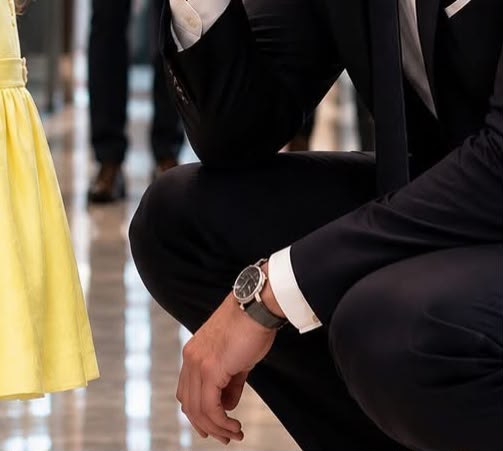
I thought of Adrian kneeling in a hallway while Mia explained why he needed to become her father.
I thought of the wooden sailboat.
The giraffe drawing.
The quiet way he had told me accepting help was not the same thing as owing someone.
“He has a whole life I don’t understand.”
“So ask.”
“He’s Adrian Kane.”
“He’s also a person.”
“He owns three homes.”
“So?”
“I own seven unmatched socks.”
“I have eight. We can merge assets.”
I laughed despite myself.
Sophie leaned forward.
“You don’t have to date him. You don’t have to do anything. But don’t decide what the answer is before anyone asks the question.”
That sentence followed me for days.
The question finally came on a Tuesday night in November.
We had won the Maison Aurelia account.
The team celebrated at a restaurant in Tribeca, occupying the entire upstairs dining room.
There was champagne, speeches, too much dessert, and the rare spectacle of Adrian Kane allowing employees to see him without a conference table nearby.
At nine-thirty, people began leaving.
I had arranged for Mia to stay with my mother, so for once I did not have to rush.
I stood near the windows overlooking the wet streets when Adrian approached.
“You’re still here.”
“So are you.”
“I’m paying.”
“I’m enjoying free dessert.”
“Practical.”
“One of my better traits.”
He held two glasses of sparkling water and offered me one.
I took it.
For a few minutes, we watched taxis smear yellow reflections across the pavement below.
“You were extraordinary on this account,” he said.
“Careful.”
“Expectations?”
“Exactly.”
He smiled.
A real smile.
Smaller than the laugh Mia had drawn out of him that first day, but no less disarming.
“Dinner,” he said.
I stared at him.
“We just had dinner.”
“You know what I mean.”
My heart began beating inconveniently.
“Adrian.”
“One dinner.”
“You’re my boss.”
“I know.”
“That makes this complicated.”
“I know.”
“And people would talk.”
“They already talk when I change the coffee supplier.”
Despite myself, I laughed.
His expression remained steady.
“If you say no, nothing changes professionally. I mean that.”
I believed him.
That was what made the decision difficult.
He waited.
No pressure.
No polished billionaire confidence.
Just a man asking a woman to dinner.
And Sophie’s voice came back to me.
Don’t decide what the answer is before anyone asks the question.
“One dinner,” I said.
Something warm appeared in his eyes.
“One.”
We went out the following Saturday.
Adrian suggested three restaurants.
I rejected all three because each had waiters who probably knew his net worth.
I chose a tiny Italian place in the West Village where tables were so close together you could hear neighboring couples deciding whether to order tiramisu.
He arrived seven minutes early.
I knew because I arrived five minutes early and found him already seated.
“You’re early,” I said.
“So are you.”
“I have a child. Five minutes early is the closest I get to luxury.”
He stood and pulled out my chair.
It should have felt formal.
Instead, it felt oddly old-fashioned.
Dinner lasted three hours.
We talked about everything we had carefully avoided at work.
He told me about being raised in Connecticut by his mother after his biological father died.
About Richard Kane entering their lives when Adrian was eleven.
“He never tried to replace my father,” Adrian said. “That was probably why I eventually let myself love him.”
The honesty of it stayed with me.
He explained that Richard had legally adopted him at sixteen, though Adrian had kept Thomas’s old sailboat and his original middle name.
“What was your father like?”
Adrian looked toward the candle between us.
“Kind. Funny. Terrible at repairing anything that wasn’t made of wood.”
“Sounds useful.”
“He once tried to fix a dishwasher and flooded the kitchen.”
“I like him already.”
Adrian laughed.
“What about Daniel?”
The question was gentle.
I told him.
Not everything.
But enough.
Daniel had been a photographer. Restless, bright, endlessly curious.
He traveled with three camera lenses and no clean socks.
He could make Mia laugh now only through stories she had heard a hundred times.
“I worry sometimes,” I confessed, “that I’m keeping him alive so carefully for her that I’m also keeping part of myself frozen there.”
Adrian said nothing immediately.
Then, “Loving someone who died isn’t a commitment to stop living.”
My eyes stung.
I hated him a little for saying exactly the right thing.
“Did someone tell you that?”
“No.”
He looked down.
“I wish they had.”
We did not kiss that night.
He walked me to my building.
We stood under the awning while the cold wind chased leaves down the sidewalk.
“This was a good dinner,” I said.
“It was.”
“That sounds like we’ve completed a successful quarterly review.”
“I was trying not to scare you.”
I smiled.
“I appreciate the restraint.”
His gaze dropped briefly to my mouth, then returned to my eyes.
“Goodnight, Claire.”
“Goodnight, Adrian.”
I went upstairs feeling something I had not allowed myself to feel in years.
Not love.
Not certainty.
Possibility.
The next morning, my mother called.
“Were you on a date last night?”
I nearly poured coffee onto the counter.
“How do you know?”
“Mia said Aunt Sophie told her Grandma was babysitting because Mommy had grown-up plans.”
“Sophie is dead to me.”
“She also said the grown-up plan might involve the handsome giraffe.”
I closed my eyes.
“Please tell me those were not Mia’s exact words.”
“They were.”
From the living room, Mia shouted, “Did you kiss him?”
“No!”
My mother laughed into the phone.
I wondered whether adulthood was simply the gradual realization that privacy was fictional.
Then my mother asked, “What’s his name?”
I hesitated.
“Adrian Kane.”
Silence.
Not long.
Two seconds, perhaps.
But I knew my mother.
I heard it.
“Mom?”
“Adrian Kane?”
“Yes.”
Another pause.
“Kane Global?”
“Yes.”
“His stepfather was Richard Kane?”
I gripped the phone more tightly.
“Yes.”
“Claire…”
Something cold moved through me.
“What?”
“Nothing.”
“That wasn’t nothing.”
She exhaled.
“I just haven’t heard that name in a long time.”
“What do you mean?”
“I knew Richard Kane.”
I stared at the kitchen wall.
“How?”
“We crossed paths years ago.”
“Crossed paths where?”
“Your father’s work.”
My father had died when I was twenty-four.
He had been an accountant for a series of mid-sized firms, none remotely connected to billionaires.
“What work?”
“Claire, it was thirty years ago. I’m sure it isn’t relevant.”
Whenever my mother said something wasn’t relevant, it usually meant she had decided it was too relevant to discuss before coffee.
“Mom.”
“Not on the phone.”
That was worse.
“Come for lunch next Sunday,” she said. “We’ll talk.”
Before I could press further, Mia ran into the kitchen demanding waffles.
The conversation ended.
But the uneasiness did not.
I tried not to think about it.
For four days, I succeeded badly.
Then on Thursday afternoon, Julian appeared in my office holding a thin cream-colored folder.
“Adrian asked you to review these before tomorrow.”
“What are they?”
“Background materials for the Bellamy acquisition.”
I took the folder.
Julian remained in the doorway.
“Something else?”
He hesitated.
“No.”
That was unusual enough to make me glance up.
“What?”
He looked toward the hallway.
Then back at me.
“You and Adrian seem… happier lately.”
Heat rose into my face.
“Julian.”
“I’m not asking for details.”
“Good.”
“I just wanted to say I’m glad.”
His sincerity disarmed me.
“Thank you.”
He nodded and left.
I opened the folder.
The Bellamy material was routine until a loose sheet slipped from between two reports and landed beside my chair.
I bent to retrieve it.
It wasn’t part of the acquisition file.
It was a photocopy of an old corporate ledger.
Kane Industries.
My eyes skimmed the page.
Vendor payments.
Consulting expenses.
Property accounts.
Then a name stopped me.
BENNETT, MICHAEL J.
My father.
I stared at it.
The entry listed a substantial payment and a notation:
Special audit review — confidential.
Below it was another handwritten note.
Per R. Kane — retain all Bennett documentation separately.
My pulse quickened.
There were thousands of Bennetts in New York.
Michael Bennett was hardly unusual.
Still, my mother’s strange silence returned to me.
I knew Richard Kane.
I carried the paper to Julian’s desk.
“Where did this come from?”
He looked at it.
His expression changed so subtly most people would have missed it.
I didn’t.
“That shouldn’t have been in there.”
“Whose file is it?”
He took the sheet but did not answer.
“Julian.”
“I need to speak with Adrian.”
“Why?”
“Because this isn’t mine to explain.”
That sentence terrified me far more than an explanation would have.
I followed him.
Adrian was in a meeting.
Julian stepped inside anyway.
Thirty seconds later, the meeting ended.
Two executives emerged looking confused.
Adrian appeared behind them.
His gaze went from Julian to me to the page in Julian’s hand.
Then he went completely still.
“You knew,” I said.
Not accusing.
Not yet.
But I saw the answer before he spoke.
“Yes.”
The floor seemed to shift beneath me.
“How long?”
“Claire, come inside.”
“How long?”
His jaw tightened.
“Since before you came to Blackwell & Reed.”
I stared at him.
The hallway suddenly felt very quiet.
“You knew who my father was before you hired me?”
“Yes.”
My heartbeat thudded in my ears.
“Why?”
He looked at Julian.
“Give us the room.”
Julian left.
I stepped inside Adrian’s office.
He closed the door.
For the first time since I had known him, Adrian seemed unsure where to begin.
Finally, he crossed to the cabinet beside his bookshelf.
He unlocked a drawer.
From it, he removed a narrow gray file box.
Old.
Worn at the edges.
He placed it on the desk between us.
“My stepfather kept this for more than twenty years,” he said.
“What is it?”
“Records involving your father.”
I did not touch the box.
“Why would Richard Kane have records involving my father?”
Adrian’s gaze held mine.
“Because Michael Bennett once discovered something inside Kane Industries that Richard believed saved the company.”
I swallowed.
“What?”
“A financial irregularity. Not theft, exactly. More complicated than that. Your father found it during an external review.”
“Why have I never heard about this?”
“Because Richard asked him to handle it privately. Your father agreed on one condition.”
“What condition?”
Adrian’s expression softened.
“That no one lose their career over an error that could be corrected.”
That sounded so painfully like my father that I had to look away.
“He believed someone had made a mistake?”
“A series of them. Richard corrected the problem. Your father refused the additional consulting fee Richard offered afterward.”
I glanced at the ledger page.
“Then what was that payment?”
“Payment for legitimate work. Nothing more.”
“Why keep a box?”
Adrian was silent for a moment.
“Because the two of them became friends.”
I looked back at him.
“What?”
“Not close friends. Not in the conventional sense. But they corresponded for years.”
He opened the box.
Inside were letters.
Dozens.
Some in my father’s handwriting.
I knew it instantly.
The slanted capitals.
The dark blue ink.
My knees weakened.
I sat down.
“My mother knows?”
“I don’t know.”
“You said you knew who I was before I came here.”
“Yes.”
“Did you hire me because of him?”
“No.”
The answer came immediately.
“You were hired by Martin Reed. I didn’t become involved until your final promotion review.”
“But you knew then.”
“Yes.”
“How?”
Adrian opened another folder.
Inside was a résumé.
Mine.
An old version.
On top, in handwriting I recognized now as Richard Kane’s, were four words.
Michael Bennett’s daughter. Watch her.
I looked up sharply.
Adrian shook his head.
“It doesn’t mean what it sounds like.”
“Then explain it.”
“He wrote that fifteen years ago.”
“Fifteen?”
“Your father sent Richard an article about you.”
“What article?”
Adrian reached into the box and removed a newspaper clipping.
College.
My senior year.
I had won a national student advertising competition.
The photograph showed me at twenty-one, hair too long, smiling with the ridiculous confidence of someone who had no idea how quickly life could change.
Beneath it, my father had written:
That’s my Claire. She sees stories everywhere.
My vision blurred.
I pressed my fingers to my lips.
Adrian continued quietly.
“Richard kept the clipping.”
“Why?”
“I think because your father mattered to him.”
I swallowed hard.
“And when you saw my résumé?”
“I remembered the name.”
“So you investigated me.”
“No.”
His answer was calm.
“I opened the file.”
“That sounds remarkably similar.”
“I read three letters. Enough to confirm you were the same Claire Bennett. Then I closed it.”
“And you never told me.”
“No.”
“Why?”
“Because they were your father’s letters, not mine.”
That stopped me.
His face held no defensiveness.
Only regret.
“I didn’t know whether you knew they existed,” he said. “I didn’t know what Richard had been entitled to keep or what your father intended your family to know. After Richard died, the box passed to me with his personal records. I put it away.”
“And then I started working here.”
“Yes.”
“And you said nothing.”
“Yes.”
“And now we’re…”
I stopped.
Neither of us had defined what we were.
One dinner.
A thousand small moments.
Something fragile and beginning.
Adrian’s eyes lowered.
“I should have told you before I asked you to dinner.”
“Yes.”
“I know.”
“Why didn’t you?”
For the first time, his composure broke—not dramatically, just enough for me to see the man beneath it.
“Because I was afraid the moment I told you, you would question every interaction we’d ever had.”
I gave a small, disbelieving laugh.
“And now?”
“Now you have every reason to.”
I stood.
“I need to go.”
“Claire.”
“I’m not quitting.”
“I wasn’t going to ask.”
“I’m not making any decisions today.”
“Good.”
“I need to talk to my mother.”
He nodded.
I reached the door.
Then stopped.
“Were you ever going to tell me?”
“Yes.”
“When?”
His silence answered before he did.
“I don’t know.”
And somehow that hurt more than if he had lied.
Sunday afternoon, my mother made chicken soup.
This was how she handled difficult conversations.
Some families raised their voices.
My mother chopped parsley.
Mia was at Sophie’s apartment baking cookies, safely removed from adult history and probably covering someone’s kitchen in flour.
I sat across from my mother at her small dining table.
The gray box rested between us.
Adrian had let me take it.
He had not asked when I would return it.
My mother stared at the box for nearly a minute.
“I wondered what happened to those.”
“You knew.”
“Yes.”
“You knew Dad wrote to Richard Kane.”
“Yes.”
“Why didn’t you ever tell me?”
She folded her hands.
“Because those letters began before you were old enough to care, and by the time you were old enough, they belonged to a part of your father’s life that seemed… separate.”
“That doesn’t make sense.”
“No.”
She smiled sadly.
“It probably doesn’t.”
I waited.
She looked toward the window.
“Your father met Richard Kane during an audit in 1997. Richard’s company had expanded too quickly. There were accounting problems. Your father found them.”
“Adrian told me.”
“Then you know Michael refused to make a spectacle of it.”
“That also sounds like him.”
“It does.”
She touched the lid of the box.
“Richard never forgot it. Neither did your father.”
“So they became friends.”
“In a strange way. They were very different men. Richard had limousines and board meetings and houses with names. Your father thought paying four dollars for coffee was moral collapse.”
I laughed unexpectedly.
“That sounds exactly like Dad.”
“They wrote because they enjoyed disagreeing.”
She smiled at the memory.
“Politics. Business. Baseball. Parenting.”
“Parenting?”
My mother looked at me.
“Yes.”
Something in her expression changed.
I opened the box.
“Can I read them?”
“They were your father’s words too.”
“That isn’t an answer.”
She drew a slow breath.
“I think he would want you to.”
For the next hour, I read.
Not every letter.
I couldn’t.
There were too many.
But enough.
My father’s voice returned in fragments.
His humor.
His impatience.
His fierce belief that the Mets would eventually reward him for his loyalty.
And woven through it all were mentions of me.
Claire started college today.
Claire changed her major again.
Claire says advertising is storytelling with a purpose, which sounds suspiciously like something advertisers tell their parents so we won’t worry.
I laughed and cried at the same sentence.
Then I found a letter dated February 2003.
Richard had written it.
Michael—
Adrian has decided he wants nothing to do with Kane Industries. At seventeen he believes this is proof of moral courage.
Your advice about letting children choose their own path was annoyingly sensible.
I hope Claire is enjoying Boston.
The next paragraph made me pause.
Richard mentioned a scholarship foundation.
A small one.
Private.
Designed to help students whose parents worked in accounting and finance.
My pulse quickened.
I had received a scholarship sophomore year.
The Bennett-Harrow Academic Grant.
Five thousand dollars.
At the time, it had felt like salvation.
I looked at my mother.
“Was my scholarship from Richard?”
Her eyes filled with recognition.
“You found that.”
“Was it?”
“Yes.”
I stood so quickly my chair scraped the floor.
“Mom!”
“Claire—”
“You let me think Dad found that scholarship through work.”
“He did.”
“Richard Kane paid for it.”
“The foundation paid for it.”
“Because of Dad.”
“Yes.”
I paced toward the window.
“Why would you hide that?”
“Because your father made me promise.”
I turned.
“What?”
“He didn’t want you to feel indebted.”
The exact word struck me.
Indebted.
I remembered Adrian in my office.
Accepting help is not the same thing as owing someone.
My mother continued.
“Your father agreed to let Richard help with your tuition only because the grant was administered independently. Michael said you were to earn it on the same terms as anyone else.”
“Did I?”
“Yes.”
“How do you know?”
“Because Richard showed him the scoring sheet when your father accused him of interfering.”
Despite everything, I laughed.
Of course Dad had accused a billionaire of rigging a scholarship.
“He really did that?”
“Your father once returned a Christmas ham to a client because it exceeded his company’s gift limit by eleven dollars.”
“That is almost aggressively ethical.”
“He was exhausting.”
She smiled.
“And wonderful.”
I sat again.
A deeper question had begun forming.
“Did Adrian know about the scholarship?”
My mother shook her head.
“I have no idea.”
I did.
Or rather, I knew how to find out.
I returned to the box.
Near the bottom were more recent letters.
One dated only months before my father died.
I opened it.
My breath stopped at the first paragraph.
Richard,
Claire is engaged.
Daniel is a photographer, which means he owns approximately nine thousand dollars of equipment and believes a retirement account is oppressive.
I smiled through sudden tears.
Then I kept reading.
He makes her laugh.
That is enough for me.
I hope someday she understands that the people worth loving are not the ones who promise never to leave. Nobody can promise that.
They are the ones who make staying a choice worth making, for as long as life allows.
I read the paragraph twice.
Then a third time.
My mother was crying silently across from me.
“I never heard him say that.”
“He wrote things he couldn’t always say.”
I touched the paper.
Near the end of the letter was one final paragraph.
And Adrian?
You worry too much about that boy.
Stop teaching him how to inherit your company and start teaching him how to believe he can build a life he actually wants.
He already knows how to be responsible.
Teach him how to be happy.
I stared at the words.
My father had written about Adrian.
Before I had ever met him.
Before either of us could have imagined that one day Adrian Kane would crouch in an office hallway while my daughter proposed an entirely new family structure.
Something was handwritten beneath my father’s signature.
Not Dad’s writing.
Richard’s.
A later note.
Michael was right about Adrian. I hope one day the boy learns it.
I took a photograph.
Then I kept searching.
At the very bottom of the box was a sealed envelope.
Yellowed slightly with age.
Across the front, in my father’s handwriting, were three words.
For Claire someday.
I stopped breathing.
My mother stood.
“I’ve never seen that.”
I looked at her.
“You’re sure?”
“Yes.”
The envelope was still sealed.
Richard Kane had kept it.
Adrian had inherited it.
And for reasons none of us yet understood, my father had written a letter to me and placed it in the hands of a man outside our family.
My fingers rested against the edge of the envelope.
For years, I had believed the past was something I had already survived.
Now, sitting at my mother’s table, I realized my father had left one final thing behind.
Not a warning.
Not a secret meant to destroy anything.
A message.
And somehow, impossibly, it had traveled through Richard Kane’s hands, into Adrian’s locked drawer, and back to me.
I turned the envelope over.
On the back, beneath the seal, my father had added one more line.
When she is ready to choose her own life.
-END OF PART 2 –PRESS NEX PART IN BOTTOM OF PAGE TO READ NEXT PART