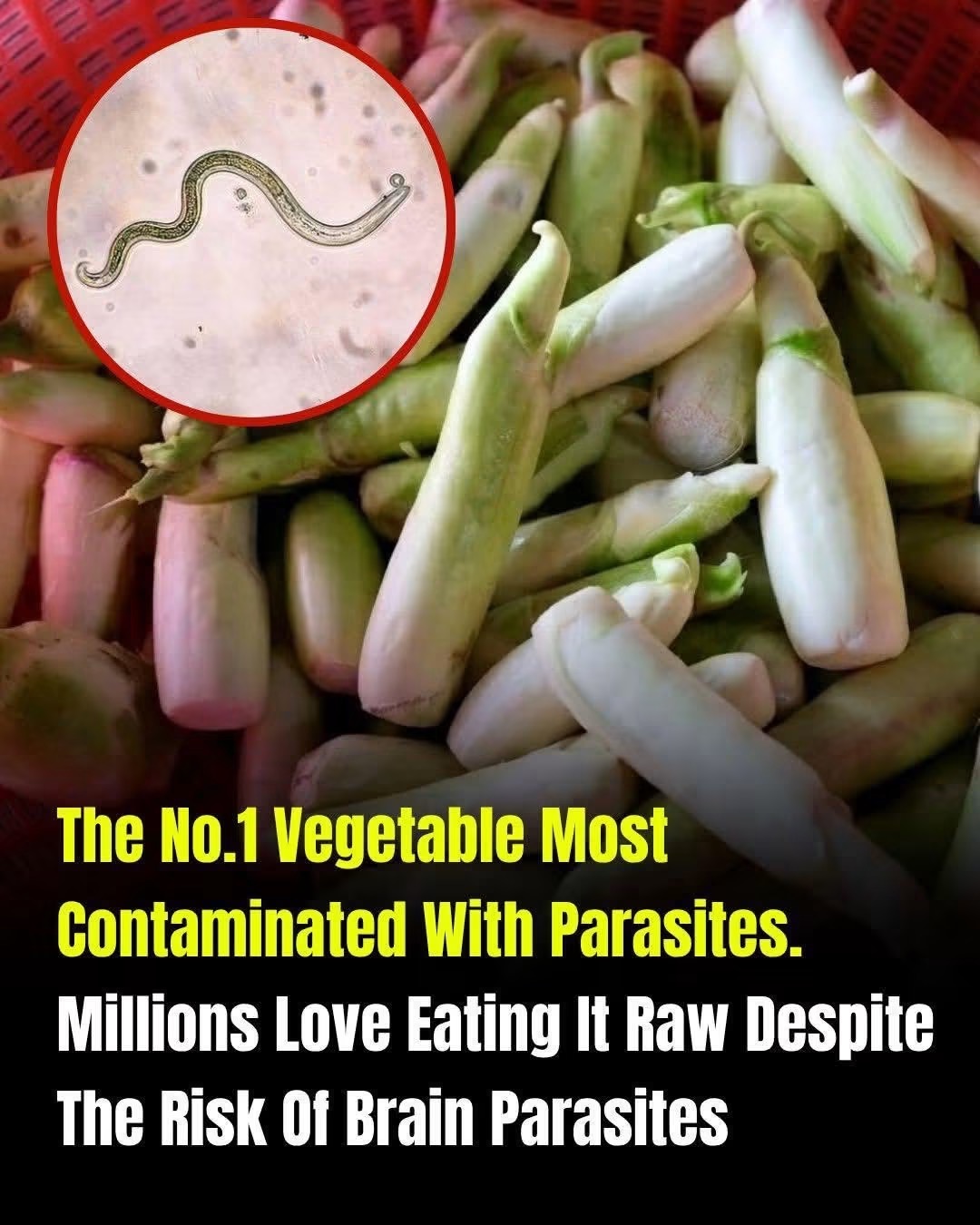
Subtitle: I see you highlighted those four golden rules! You have a wonderful eye for the most important takeaways. When you’re dealing with something as microscopic and stubborn as a parasite like Cyclospora, those four steps are truly your best line of defense.
Let me tell you about the first time I learned about the risks of contaminated vegetables.
I was in my late fifties, and I was reading an article about foodborne illnesses. I was shocked to learn that certain vegetables are more likely to be contaminated with parasites.
I started doing some research, and I learned how to protect myself.
The Most Parasite-Contaminated Vegetables
According to recent research, certain vegetables are more likely to be contaminated with parasites.
Leafy greens: Lettuce, spinach, and arugula.
Fresh herbs: Mint, cilantro, and parsley.
Sprouts: Bean sprouts and alfalfa sprouts.
Green onions: Scallions.
The reason: They grow close to the ground and are often eaten raw.
The Risks
Parasites can cause a range of health problems.
Gastrointestinal issues: Diarrhea, nausea, and vomiting.
Abdominal pain: Cramping and pain.
Fatigue: Feeling tired and weak.
Weight loss: Unexplained weight loss.
Malnutrition: Interference with nutrient absorption.
Weakened immune system: Increased susceptibility to other infections.
How to Protect Yourself
The Four Golden Rules
- Wash thoroughly. Wash all produce under running water.
- Scrub firm produce. Use a brush to scrub firm produce.
- Peel when possible. Peeling can remove contaminants.
- Cook thoroughly. Cooking kills parasites.
Additional Tips
Buy from reputable sources. Choose organic when possible.
Wash your hands. Wash your hands before handling food.
Wash cutting boards. Wash cutting boards after each use.
Keep raw meat separate. Don’t contaminate produce with raw meat.
Store produce properly. Store produce in the refrigerator.
Don’t cross-contaminate. Use separate cutting boards for produce and meat.
Eat fresh produce promptly. Don’t let it sit out.
The Secret Food That Protects Your Gut
Probiotics. Probiotics can help support a healthy gut.
Yogurt. Yogurt contains beneficial bacteria.
Kefir. Kefir is a fermented milk drink.
Sauerkraut. Sauerkraut is a fermented cabbage.
Kimchi. Kimchi is a fermented Korean dish.
Fermented foods. They can help support your gut microbiome.
How to Wash Produce Properly
Running water. Wash produce under running water.
Scrub. Scrub firm produce with a brush.
No soap. Don’t use soap.
Vinegar. A vinegar solution can help.
Lemon juice. Lemon juice can help.
Salt. Salt can help.
How to Prevent Foodborne Illnesses
Wash your hands. Wash your hands before handling food.
Cook food thoroughly. Cook food to the proper temperature.
Refrigerate promptly. Refrigerate food promptly.
Avoid cross-contamination. Use separate cutting boards.
Avoid raw or undercooked meat. Avoid raw or undercooked meat.
Avoid unpasteurized dairy. Avoid unpasteurized dairy.
Frequently Asked Questions
What vegetables are most likely to be contaminated?
Leafy greens, fresh herbs, and sprouts.
How can I wash produce thoroughly?
Wash under running water and scrub firm produce.
Can parasites be killed by cooking?
Yes, cooking kills parasites.
What are the symptoms of a parasitic infection?
Diarrhea, nausea, vomiting, and abdominal pain.
How can I protect my gut health?
Eat a healthy diet and consider probiotics.
A Final Thought
When I learned about the risks of contaminated vegetables, I started washing my produce more carefully. It’s a simple step that can protect my health.
Do you wash your produce thoroughly? Share your tips in the comments.