Introduction
The spider plant (Chlorophytum comosum) is one of the easiest and most rewarding houseplants you can grow. Known for its graceful arching leaves with vibrant green and white stripes, this hardy plant thrives in a variety of conditions and is perfect for beginners as well as experienced plant lovers.
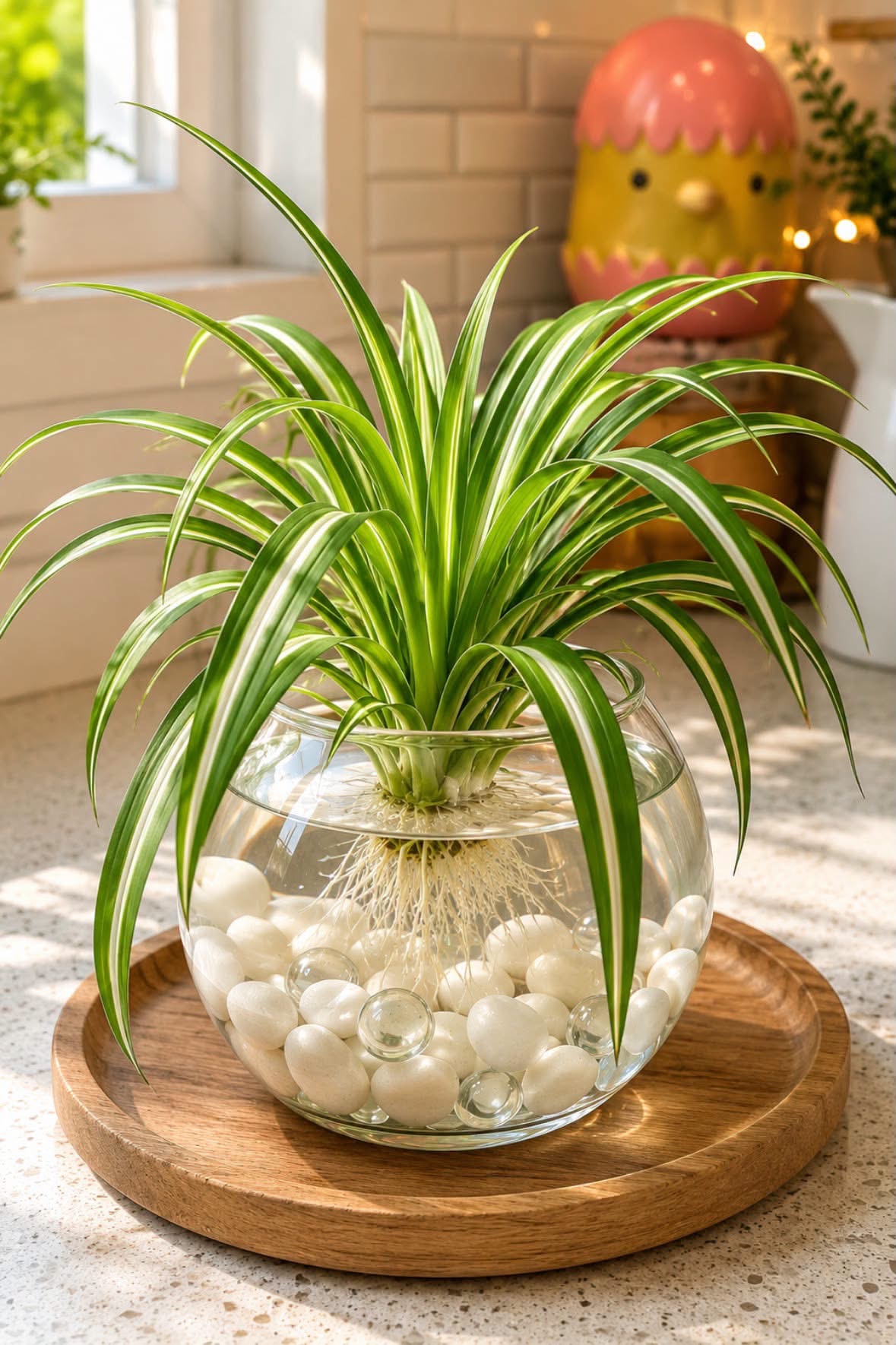
Growing a spider plant in water, as shown in the image, creates an elegant decorative centerpiece while allowing you to observe its healthy white roots. Whether placed in a kitchen, office, or living room, this plant brings natural beauty, fresh greenery, and a calming atmosphere to any space.
What Makes Spider Plants Special?
Spider plants are famous for their resilience and adaptability. They produce long, ribbon-like leaves that grow in attractive fountains and eventually send out baby plants, often called “spiderettes,” which can easily be propagated.
These plants have been cherished for decades because they require very little attention while remaining lush and vibrant throughout the year.
Growing a Spider Plant in Water
Growing a spider plant in water is simple and visually appealing.
Choose a healthy spider plant with strong roots or root a baby spiderette in clean water.
Place the roots inside a clear glass container while keeping the crown of the plant above the waterline.
Decorative stones, pebbles, or glass marbles can be added to stabilize the plant and enhance its appearance.
Replace the water every 7 to 10 days to prevent bacteria and algae from developing.
Use filtered or distilled water whenever possible, especially if your tap water contains high levels of chlorine.
Keep the container in bright, indirect sunlight.
Avoid placing the plant in intense afternoon sun, which may scorch the leaves.
Care Tips
Bright indirect light produces the healthiest leaves.
Maintain temperatures between 60°F and 80°F (16°C–27°C).
Trim away yellow or damaged leaves to encourage fresh growth.
Clean the container regularly to keep the roots healthy.
If growing long-term in water, add a small amount of liquid hydroponic fertilizer once every four to six weeks.
Rotate the container occasionally so the plant grows evenly on all sides.
Benefits of Growing Spider Plants
Spider plants are incredibly easy to maintain.
They improve the appearance of indoor spaces with vibrant foliage.
Their elegant leaves create a relaxing and natural atmosphere.
The visible root system in a glass vase provides an attractive modern display.
Spider plants produce numerous baby plants that can be propagated and shared.
They adapt well to homes, apartments, classrooms, and offices.
They are considered pet-friendly for both cats and dogs, although curious pets may occasionally nibble on the leaves.
Can Spider Plants Help Clean Indoor Air?
Spider plants became well known after research suggested they could remove certain airborne compounds under laboratory conditions. While a single houseplant will not significantly purify the air in an average room, keeping healthy indoor plants can contribute to a more pleasant and inviting living environment.
Common Problems
Yellow leaves may indicate excessive sunlight or poor water quality.
Brown leaf tips often result from fluoride, chlorine, or mineral buildup in tap water.
Soft or dark roots usually signal that the water has not been changed frequently enough.
Slow growth may occur if the plant is not receiving enough light or nutrients.
Decorating Ideas
Display the plant in a clear round glass bowl with white stones for a minimalist look.
Place it on a wooden tray to add warmth and contrast.
Pair it with ceramic pots or natural wood décor for a fresh modern style.
Position it near a bright window where the leaves can catch natural light.
Combine several water-grown plants of different heights to create a striking indoor arrangement.
Interesting Facts
Spider plants originate from tropical and southern Africa.
They are among the most commonly recommended houseplants for beginners.
A mature plant can produce dozens of baby spider plants every year.
They can thrive in soil, water, or hydroponic systems with proper care.
With good maintenance, spider plants can live for many years and continue producing new growth.
Conclusion
A spider plant grown in water combines natural elegance with effortless care. Its lush striped leaves, fascinating root system, and adaptability make it one of the best choices for anyone looking to add greenery to their home. With regular water changes, bright indirect light, and occasional nutrients, this beautiful houseplant will remain healthy, vibrant, and eye-catching for years to come.