Introduction
Snake plants (Sansevieria, also known as Dracaena trifasciata) are among the easiest and most rewarding houseplants to grow. Their upright, architectural leaves make them a beautiful addition to homes, patios, balconies, and gardens. Whether you’re a beginner or an experienced plant enthusiast, snake plants require very little maintenance while providing year-round beauty.
This guide covers everything you need to know to keep your snake plants healthy, vibrant, and thriving.
Why Choose Snake Plants?
Snake plants are popular because they are:
Easy to care for
Drought tolerant
Long-lasting
Suitable for indoor and outdoor spaces
Available in many sizes and varieties
Perfect for beginners
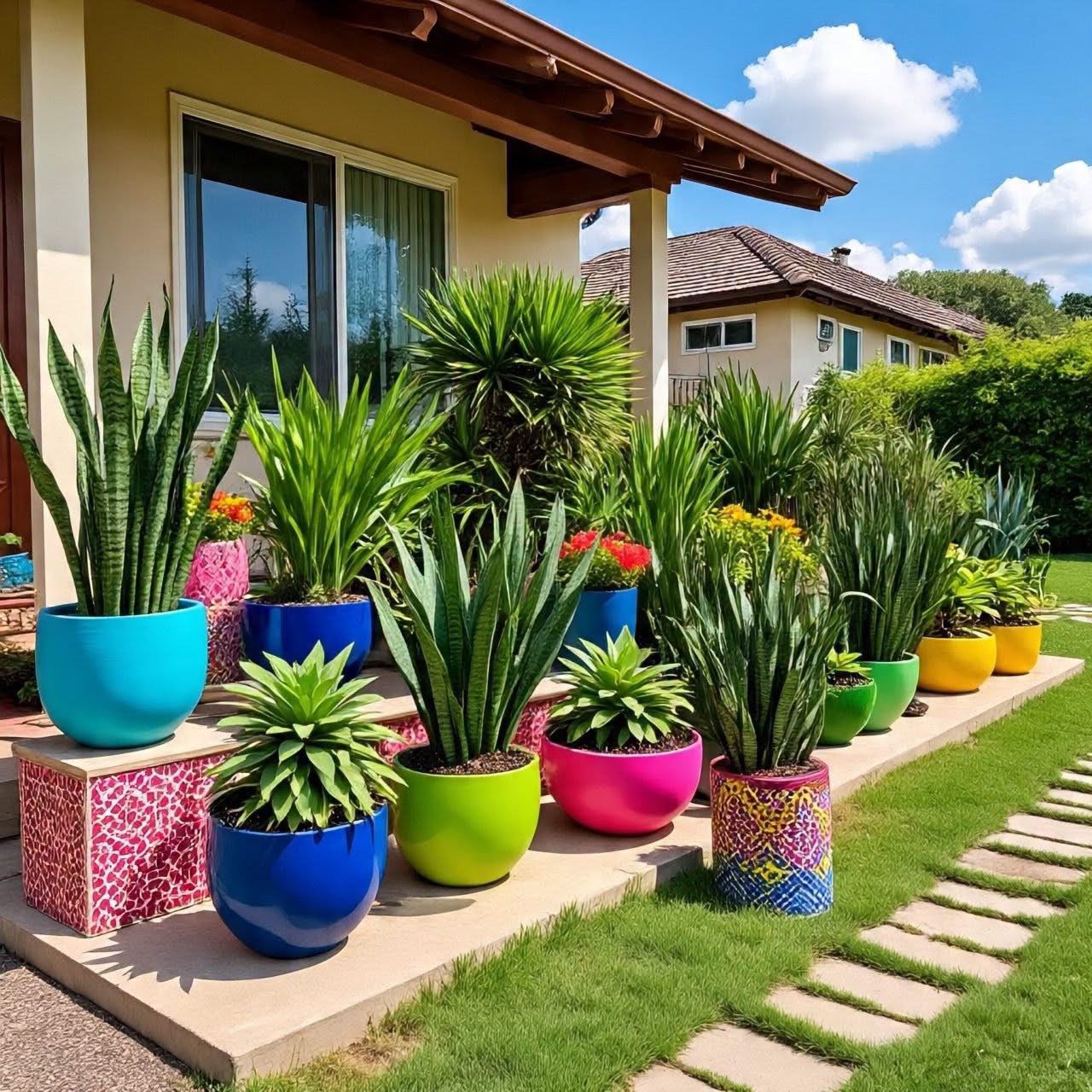
Their striking foliage pairs beautifully with colorful decorative pots, creating an eye-catching display like the one shown above.
Types of Snake Plants
There are many varieties of snake plants, including:
Laurentii with yellow-edged leaves
Moonshine with silvery-green foliage
Black Coral featuring dark green patterns
Bird’s Nest Snake Plant with a compact rosette shape
Cylindrical Snake Plant with round spear-like leaves
Mixing different varieties creates texture and visual interest in your garden or home.
Light Requirements
Snake plants adapt to almost any lighting condition.
Bright indirect light encourages faster growth.
Medium light keeps the plant healthy.
Low light is tolerated, although growth slows.
Outdoor plants should receive filtered sunlight or morning sun rather than intense afternoon heat.
Watering
Overwatering is the most common reason snake plants fail.
Water only when the soil is completely dry.
During warm months, watering every two to three weeks is usually enough.
In winter, once every four to six weeks is often sufficient.
Always empty excess water from saucers to prevent root rot.
Best Soil
Use a fast-draining potting mix.
A cactus or succulent soil works perfectly because it prevents water from collecting around the roots.
Adding perlite or coarse sand improves drainage even further.
Choosing the Right Pot
Pots with drainage holes are essential.
Ceramic and terracotta pots help moisture evaporate faster, reducing the risk of overwatering.
Choose a pot only slightly larger than the current root ball.
Temperature and Humidity
Snake plants prefer temperatures between 18°C and 30°C.
They tolerate normal indoor humidity and do not require misting.
Protect them from frost and prolonged temperatures below 10°C.
Fertilizing
Feed your snake plant during spring and summer.
Use a balanced liquid houseplant fertilizer once every four to six weeks.
Avoid fertilizing during winter when growth naturally slows.
Repotting
Repot every two to three years or when roots begin growing through the drainage holes.
Fresh soil provides new nutrients and encourages healthy root development.
Propagation
Snake plants are easy to multiply.
You can propagate them by:
Dividing mature plants
Rooting leaf cuttings in water
Planting leaf cuttings directly into soil
Division is the quickest method and preserves the characteristics of variegated varieties.
Common Problems
Yellow leaves usually indicate overwatering.
Soft, mushy leaves suggest root rot.
Brown tips may result from underwatering or extreme temperatures.
Wrinkled leaves often mean the plant needs water.
Inspect regularly for pests such as mealybugs or spider mites.
Decorating with Snake Plants
Snake plants look stunning in:
Colorful ceramic pots
Modern minimalist containers
Patio displays
Entryways
Living rooms
Bedrooms
Office spaces
Combining different heights and pot colors creates a vibrant, professional landscape that requires minimal maintenance.
Benefits
Improves indoor aesthetics
Requires very little maintenance
Excellent drought tolerance
Long lifespan
Ideal for beginners
Suitable for homes and offices
Works beautifully in containers
Can thrive indoors and outdoors in suitable climates
Tips for Healthy Growth
Allow soil to dry completely before watering.
Provide bright indirect light whenever possible.
Avoid letting pots sit in standing water.
Clean leaves occasionally with a damp cloth.
Rotate indoor plants every few weeks for even growth.
Repot only when necessary.
Protect from freezing temperatures.
Conclusion
Snake plants are one of the most dependable and versatile plants you can grow. Their bold foliage, resilience, and minimal care requirements make them perfect for nearly any home or garden. With proper watering, well-draining soil, and the right amount of light, these beautiful plants will remain healthy and attractive for many years while adding elegance and greenery to your space.