Introduction
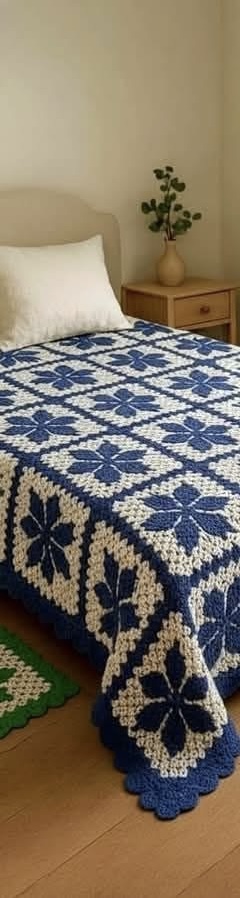
In a world where fast fashion and factory-made textiles dominate our homes, there is something profoundly grounding about stepping into a room filled with handmade crochet work. The scene captures more than color and texture — it reflects a lifetime of skill, patience, and love woven into every stitch. The crocheted bedspread, curtains, and mats seen in this setting are more than decorations; they represent the quiet persistence of a craft passed down through generations.
This article explores the artistry behind the work, the significance of handmade textiles, the techniques used to create such pieces, their cultural and emotional meaning, and the lasting value they bring to a home.
The Beauty and Symbolism of the Crochet Motif
The stunning blue-and-white motif covering the bed and curtains is a classic floral square, a pattern that has appeared in many cultures worldwide. Each square is bordered, assembled with precision, and shaped into a large coordinated set. The unity of the colors gives the room a calm, vintage warmth.
The green rugs on the floor show a variation of the same motif, demonstrating the versatility of the pattern. Color changes can transform the entire atmosphere of a room without altering the technique.
Symbolic Meanings
- The flower motif represents growth, harmony, and life.
- Blue traditionally symbolizes peace, comfort, and home.
- Green often signifies renewal and nature.
For many artisans, selecting colors is not random—it carries emotional or cultural intention.
Historical Background
Crochet, as an art form, is believed to have originated in Europe in the 19th century. However, similar styles existed across various regions long before. Traditionally, crochet work was:
- A skill passed from grandmother to granddaughter.
- A way to decorate homes before industrial textiles became common.
- A sign of patience, creativity, and steady craftsmanship.
- Often used to prepare trousseau items for weddings and family gifts.
Women like the grandmother in the scene represent the last generation who often learned these skills as children, practicing them for decades until the techniques became second nature.
Technical Breakdown: How Such Work Is Made
1. Selecting Materials
- Yarn: Typically medium-weight or chunky yarn creates thick, textured pieces like the ones pictured.
- Hooks: Larger hooks help achieve the soft, raised effect.
- Pattern: The floral square is created individually and later joined.
2. Crochet Stitches Used
(Non-explicit, beginner-safe explanation)
- Chain stitch forms the foundation.
- Single crochet adds structure.
- Double crochet creates height and openness.
- Cluster stitches build the petal shapes.
3. Assembling the Squares
Each square is made one at a time. After completing dozens—or even hundreds—the artisan arranges them in a balanced pattern, then joins them using whip stitch or continuous join techniques.
4. Edging and Finishing
A scalloped border gives the final piece an elegant, cohesive look. This step alone may take hours, adding refinement to the edges of blankets, curtains, or mats.
The Intergenerational Value of Handmade Work
Handmade crochet pieces often become:
- Family heirlooms stored and handed down for decades.
- Gifts for children and grandchildren, carrying emotional history.
- Daily reminders of the creator’s presence, effort, and affection.
- Symbols of patience, as each piece requires time, dedication, and focus.
In many families, these works survive long after the hands that made them have stilled, preserving memory in the most tangible way possible.
Benefits of Crochet Work in the Home
1. Durability
Crochet pieces, especially thick ones, can last for decades with proper care. They resist wear, hold their shape, and often look better over time.
2. Comfort and Warmth
The raised texture traps heat, making blankets cozy and curtains excellent for insulation.
3. Aesthetic Appeal
Handmade work adds character no factory item can replicate. The imperfections are part of the beauty, showing the human touch behind every loop of yarn.
4. Emotional Value
Home décor with a personal story creates a comforting environment, strengthening bonds between generations.
The Artisan: A Life of Skill and Dedication
The elderly woman in the image represents the heart of the scene—not just as a person but as the artist whose hands shaped every piece. Her posture, clothing, and gentle expression suggest years of experience and pride in her work.
Craftswomen of her generation often learned needlework before they could read. They crocheted during quiet evenings, family gatherings, and moments of rest. Every piece becomes part of their life story, containing countless hours of focus, memory, and care.
Conclusion
The room reflects not only color and design but also heritage. The crocheted blanket, curtains, and mats show what happens when creativity and tradition join hands. Handmade pieces like these carry stories that store-bought textiles never will. They honor the skill of the maker, add warmth to a home, and connect generations through art that will be treasured for years.
This is more than décor—it’s living history, crafted stitch by stitch.