A Health Myth Explained Clearly and Honestly
Introduction
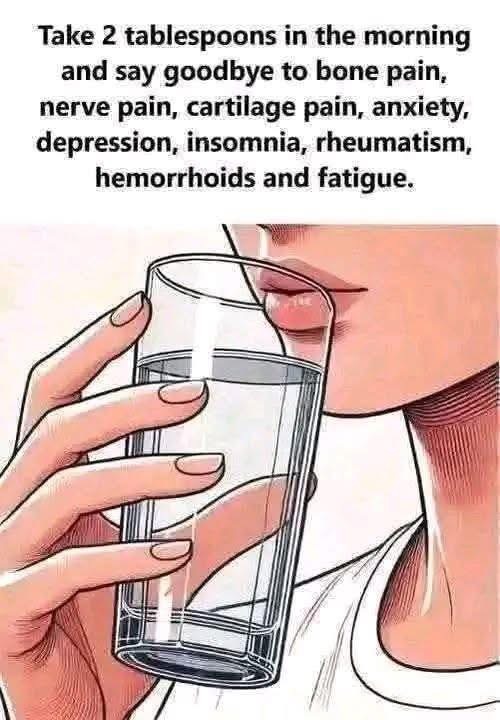
Images like the one you shared are everywhere on social media. They often show a simple action — such as drinking a glass of water or taking “2 tablespoons” of something — and promise to cure bone pain, nerve pain, anxiety, depression, insomnia, fatigue, and many other conditions all at once.
These posts are attractive because they suggest an easy, natural, and instant solution. However, health does not work that way. This article explains why these claims are misleading, what water and similar remedies can actually do, and how to approach health information safely and wisely.
What the Image Is Claiming
The image suggests that taking 2 tablespoons in the morning (usually implying water, oil, vinegar, or a “natural remedy”) will eliminate:
- Bone pain
- Nerve pain
- Cartilage pain
- Anxiety
- Depression
- Insomnia
- Rheumatism
- Hemorrhoids
- Fatigue
This is a very broad list involving bones, nerves, mental health, sleep, and digestive issues — all of which have different causes and treatments.
Why One Remedy Cannot Cure Everything
Each condition listed comes from different systems in the body:
- Bone and cartilage pain → joints, minerals, inflammation, movement
- Nerve pain → nervous system signaling
- Anxiety and depression → brain chemistry, environment, stress, support
- Insomnia → sleep rhythms, habits, stress
- Fatigue → nutrition, sleep, activity, illness
Because these systems work differently, no single drink or spoonful can fix them all.
If something sounds too good to be true, it usually is.
What Drinking Water Actually Does (The Truth)
Water is essential for life, and drinking enough water can:
- Help prevent dehydration
- Support digestion
- Improve focus and energy when dehydrated
- Help joints move smoothly
- Support overall body function
However, water does not cure diseases, mental health conditions, or chronic pain on its own.
Drinking water is supportive, not curative.
The Danger of Health Misinformation
Believing these types of claims can cause problems:
- People may delay real treatment
- Chronic conditions may worsen over time
- Mental health concerns may be ignored
- False hope can lead to disappointment and confusion
Misinformation spreads fast because it is simple, emotional, and dramatic — but real health care is often gradual and personalized.
Why These Posts Go Viral
These images succeed because they:
- Promise instant results
- Use natural-sounding language
- Avoid medical explanations
- Target people who are tired, stressed, or in pain
They often do not mention ingredients clearly, side effects, or scientific evidence.
What Actually Helps With Pain and Fatigue
While no miracle cure exists, real improvement often comes from:
- Regular hydration
- Balanced meals
- Gentle physical activity
- Proper sleep routines
- Stress management
- Asking trusted adults or healthcare professionals for help
Small habits, done consistently, matter more than viral “hacks.”
How to Spot Fake Health Claims
Be cautious if a post:
- Claims to cure many unrelated conditions
- Says “do this once a day” for everything
- Uses words like guaranteed, instantly, or say goodbye forever
- Does not name credible sources
Good health advice is usually specific, realistic, and evidence-based.
A Healthy Morning Habit (Realistic Version)
Instead of miracle claims, a healthy morning might include:
- A glass of water
- A nutritious breakfast
- Stretching or light movement
- Planning the day calmly
These habits support your body, not “fix” it overnight.
Conclusion
The image you shared is a misleading health claim, not a medical fact. Drinking water is good for you, but it cannot cure pain, mental health conditions, or chronic illnesses on its own.
True health comes from consistent care, balance, and reliable information, not viral promises.
Being curious is good — but being informed is even better.