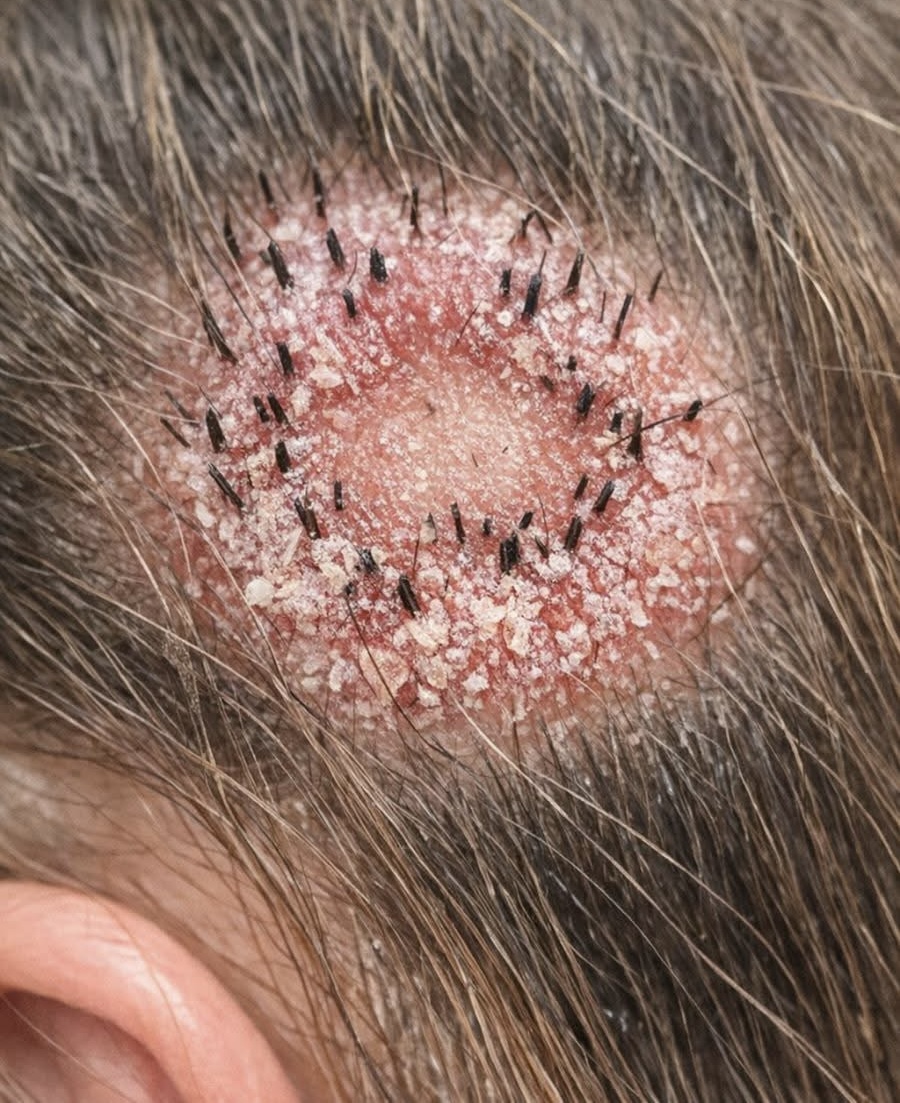
Discovering a mysterious red ring on your child’s scalp accompanied by snapping hair can be alarming for any parent. This condition not only raises concerns about your child’s health but also about how quickly it appears to spread. It’s important to understand that while the situation might seem daunting, gathering the right information can help you take prompt and effective action to address it.
In this article, we’ll explore possible causes for these symptoms, with a focus on tinea capitis – a common fungal infection of the scalp. Additionally, we’ll guide you on differentiating it from other scalp issues, when to seek professional medical help, and practical home steps you can take for immediate relief and containment. We’ll also delve into preventive measures to protect others in your household and discuss how to communicate with your child about their condition.
1. Why A Red Ring And Snapping Hair Can Be A Medical Emergency
A red ring on the scalp with hair breaking off can signal a potentially serious condition that requires prompt attention, particularly when it spreads rapidly. Such symptoms are often indicative of an infection, which, if left untreated, can lead to more severe health issues. The scalp is a sensitive area, and infections can quickly spread and cause significant discomfort or pain.
Furthermore, the presence of a red ring could suggest an inflammatory response, which might lead to further complications such as secondary bacterial infections. The rapid spreading nature of the condition also means it could be contagious, posing a risk to others, especially in communal settings like schools or playgrounds.
2. Tinea Capitis 101: The Scalp Fungus Behind That Spreading Ring
Tinea capitis, commonly known as ringworm of the scalp, is a fungal infection that primarily affects children. It’s caused by dermatophyte fungi, which thrive in warm, moist environments. The fungus invades the hair shaft and scalp, leading to patches of hair loss, scaly skin, and the characteristic red ring.
This condition spreads through direct contact with an infected person or animal, or indirectly through contaminated objects like hairbrushes or hats. The infection can be highly contagious, making it essential to address it promptly to prevent outbreaks. Symptoms often include itchy, scaly patches on the scalp, sometimes accompanied by black dots where hair has broken off at the scalp surface.
3. How To Tell Ringworm Of The Scalp From Dandruff, Eczema, Or Lice
Differentiating tinea capitis from other scalp conditions is crucial for effective treatment. Dandruff typically presents as flaky, white scales without significant hair loss or red rings. Eczema, or atopic dermatitis, might cause red, inflamed patches but usually comes with a history of similar skin issues elsewhere on the body.
Head lice, on the other hand, cause intense itching and the appearance of lice or nits (eggs) in the hair, but not the red ring or significant hair breakage. Ringworm can be identified by its distinct round, scaly patches and localized hair loss, often with the hair breaking off near the scalp.
4. Red Flags That Mean You Should Skip Home Remedies And Go Straight To The ER
While home remedies can be tempting, certain symptoms necessitate immediate medical attention. If your child experiences severe pain, fever, or swelling, these could indicate a serious infection that requires professional intervention. Additionally, if the red ring is rapidly expanding or multiple areas of the scalp are affected, it’s crucial to seek medical help.
Other red flags include pus or fluid-filled bumps, which might suggest a secondary bacterial infection, or if your child’s general health seems to be deteriorating. In such cases, skipping home treatments in favor of a doctor’s visit is the safest option.
5. Safe First Steps At Home: Cleaning, Comfort, And Containing The Spread
While waiting for professional medical care, there are steps you can take at home to manage symptoms and prevent spreading the infection. Gently wash your child’s scalp with a mild, antifungal shampoo to help reduce fungal growth. Ensure your child avoids scratching the affected area to prevent further irritation or infection.
To contain the spread, wash your child’s bedding, hats, and hair accessories in hot water and disinfect shared surfaces. Encourage your child to avoid sharing personal items such as combs, towels, or pillows with others.
6. What Not To Do: TikTok ‘Cures’ And Home Remedies That Can Make It Worse
In the age of social media, it’s important to approach viral home remedies with caution. Some online suggestions, such as applying vinegar, garlic, or essential oils directly to the scalp, can cause irritation or allergic reactions, worsening the condition.
Additionally, abrasive cleaning methods or harsh chemicals might further damage the scalp. Always prioritize evidence-based treatments and consult with a healthcare professional before trying unconventional remedies.
7. Over-The-Counter Options: What Helps On Skin But Fails On The Scalp
Over-the-counter antifungal creams, like those used for athlete’s foot, may not be effective for scalp infections, as they don’t penetrate the hair follicles where the fungus resides. Products containing terbinafine or clotrimazole are more suited for skin infections and might not adequately address tinea capitis.
Instead, oral antifungal medications prescribed by a doctor are usually necessary to effectively treat the infection at its source. Topical treatments alone are often insufficient for scalp infections.
8. Protecting Siblings And Classmates: Laundry, Bedding, And Hygiene Hacks
Preventing the spread of tinea capitis involves diligent hygiene practices. Wash your child’s clothing, bedding, and towels in hot water and dry them thoroughly. Consider using a washing machine with a sanitize cycle if available.
Instruct your child to avoid sharing personal items and maintain regular handwashing. Inform your child’s school or daycare about the infection to help prevent an outbreak and encourage other parents to check for similar symptoms in their children.
9. Talking To Your Child: Easing Fear, Pain, And Embarrassment About Hair Loss
Hair loss and visible scalp changes can be distressing for a child. It’s important to reassure your child that the condition is temporary and treatable. Explain the situation in simple terms, emphasizing that it’s something many children experience and that they’re not alone.
Support your child by acknowledging their feelings and encouraging them to express any worries they might have. Providing a hat or headscarf can help them feel more comfortable in public settings while the condition is being treated.
10. What To Expect At The Doctor Or ER: Tests, Medications, And Follow-Up
During a medical visit, a doctor will typically examine the scalp and may perform a fungal culture or a KOH test to confirm the diagnosis of tinea capitis. Once confirmed, an oral antifungal medication such as griseofulvin or terbinafine is often prescribed for several weeks to ensure complete eradication of the fungus.
In some cases, the doctor might recommend an antifungal shampoo to be used in conjunction with oral medication. Follow-up appointments are important to monitor progress and ensure the infection is fully resolved.
11. Preventing Future Outbreaks: Long-Term Scalp And Household Care
Post-treatment, maintaining good scalp hygiene and household cleanliness can help prevent future outbreaks. Encourage your child to keep their hair clean and dry and to avoid sharing personal items that come into contact with the scalp.
Regularly wash and disinfect items that may harbor fungi, and stay vigilant for early signs of scalp infections, especially after visiting communal areas like pools or gyms. Educating your child on these practices can empower them to take an active role in their own health and wellbeing.